Introduction
Introduction
Most B2B companies fail at LinkedIn marketing because they post content without a clear strategy, audience understanding, trust-building system, or lead-generation process. In markets like the USA, UK, and Canada, LinkedIn buyers do not respond to generic service posts, company updates, or direct sales messages. They look for expertise, proof, industry knowledge, clear positioning, and business value before they start a conversation.
LinkedIn is one of the strongest platforms for B2B growth because decision-makers already use it to research companies, compare vendors, follow industry experts, and discover useful business insights. CEOs, founders, CTOs, CMOs, procurement heads, HR leaders, operations managers,
and business owners are active on LinkedIn. But reaching them is not the same as convincing them.
Many B2B brands publish regularly and still get weak results. They create branded posts, share company achievements, send cold messages, and sometimes run paid campaigns. Still, they struggle to generate qualified leads.
The reason is simple: LinkedIn marketing for B2B companies is not about posting more. It is about building authority, trust, relevance, and
demand with the right audience.
This blog explains why most B2B companies fail at LinkedIn marketing in the USA, UK, and Canada, and what they should do to turn LinkedIn into
a serious business growth channel.
Treating LinkedIn Like a Posting Platform,
Not a Business Channel
The biggest mistake B2B companies make is treating LinkedIn like a place to “stay active.” They post because they feel they should post,
not because they have a clear business objective. Their content often includes:
Treating LinkedIn Like a Posting Platform,
Not a Business Channel
The biggest mistake B2B companies make is treating LinkedIn like a place to “stay active.” They post because they feel they should post, not because they have a clear business objective. Their content often includes:
Company announcements
Festival greetings
Team celebrations
Company announcements
Festival greetings
Team celebrations
Generic service graphics
Hiring updates
Basic promotional captions
Generic service graphics
Hiring updates
Basic promotional captions
These posts may make the page look active, but they rarely create demand. B2B buyers in the USA, UK, and Canada are not looking for random updates.
They are looking for answers to real business problems.
A SaaS founder may want to know how to reduce churn. A manufacturing company may want better operational visibility. A healthcare business may want
more qualified leads. An eCommerce brand may want better product visibility. A consulting firm may want stronger authority in a competitive market.
If your LinkedIn content does not help buyers solve problems, avoid mistakes, compare options, or understand opportunities, it will not generate meaningful results.
LinkedIn should be treated as a business development channel, not a notice board.
These posts may make the page look active, but they rarely create demand. B2B buyers in the USA, UK, and Canada are not looking for random updates.
They are looking for answers to real business problems.
A SaaS founder may want to know how to reduce churn. A manufacturing company may want better operational visibility. A healthcare business may want
more qualified leads. An eCommerce brand may want better product visibility. A consulting firm may want stronger authority in a competitive market.
If your LinkedIn content does not help buyers solve problems, avoid mistakes, compare options, or understand opportunities, it will not generate meaningful results.
LinkedIn should be treated as a business development channel, not a notice board.
Not Understanding Buyer Clearly
Many B2B companies say they target “business owners” or “global clients.” That is too broad. LinkedIn marketing fails when the audience is unclear. A strong B2B LinkedIn strategy starts with specific buyer understanding.
For example:
Are you targeting CEOs in the USA?
Are you targeting SMEs in the UK?
Are you targeting eCommerce businesses in Canada?
Are you targeting SaaS founders?
Are you targeting manufacturing decision-makers?
Are you targeting healthcare companies?
Are you targeting HR leaders, CTOs, CFOs, or marketing heads?
Each audience has different problems, priorities, budgets, and buying triggers. A CEO cares about growth, risk, and ROI. A CTO cares about security, scalability, and technical reliability. Meanwhile, CMO cares about pipeline, brand visibility, and customer acquisition.
A procurement head cares about cost, delivery, compliance, and vendor reliability.
When a B2B company does not define the buyer clearly, the content becomes generic. Generic content does not build trust.

Not Understanding Buyer Clearly
Many B2B companies say they target “business owners” or “global clients.” That is too broad. LinkedIn marketing fails when the audience is unclear. A strong B2B LinkedIn strategy starts with specific buyer understanding.
For example:
Are you targeting CEOs in the USA?
Are you targeting SMEs in the UK?
Are you targeting eCommerce businesses in Canada?
Are you targeting SaaS founders?
Are you targeting manufacturing decision-makers?
Are you targeting healthcare companies?
Are you targeting HR leaders, CTOs, CFOs, or marketing heads?
Each audience has different problems, priorities, budgets, and buying triggers. A CEO cares about growth, risk, and ROI. A CTO cares about security, scalability, and technical reliability. Meanwhile, CMO cares about pipeline, brand visibility, and customer acquisition.
A procurement head cares about cost, delivery, compliance, and vendor reliability.
When a B2B company does not define the buyer clearly, the content becomes generic. Generic content does not build trust.
Their Content Sounds Like Every Competitor
One of the biggest reasons B2B LinkedIn marketing fails is generic messaging. Many companies use phrases like:
For example:
“We provide end-to-end solutions.”
“We help businesses grow.”
“We are your trusted partner.”
“We offer cost-effective services.”
“We deliver quality results.”
These lines are common, but they do not prove expertise. Buyers in the USA, UK, and Canada have already seen hundreds of companies saying the same thing.

Their Content Sounds Like Every Competitor
One of the biggest reasons B2B LinkedIn marketing fails is generic messaging. Many companies use phrases like:
For example:
“We provide end-to-end solutions.”
“We help businesses grow.”
“We are your trusted partner.”
“We offer cost-effective services.”
“We deliver quality results.”
These lines are common, but they do not prove expertise. Buyers in the USA, UK, and Canada have already seen hundreds of companies saying the same thing.
Nature of LinkedIn Post
- Weak Post
- Access all modules
Example
- We provide digital marketing services for B2B companies.
- Most B2B companies do not have a traffic problem. They have a trust problem. If your website does not explain the pain point, proof, process, and next step clearly, more traffic will not automatically turn into leads.
Nature of LinkedIn Post
- Weak Post
- Access all modules
Example
- We provide digital marketing services for B2B companies.
- Most B2B companies do not have a traffic problem. They have a trust problem. If your website does not explain the pain point, proof, process, and next step clearly, more traffic will not automatically turn into leads.
The second post (strong) works better because it gives insight. It shows experience. It helps the buyer think differently. B2B buyers trust companies that can explain problems clearly. If your content only promotes services, it will be ignored. If your content teaches, challenges, and guides, it will build authority.
The second post (strong) works better because it gives insight. It shows experience. It helps the buyer think differently. B2B buyers trust companies that can explain problems clearly. If your content only promotes services, it will be ignored. If your content teaches, challenges, and guides, it will build authority.
Selling Too Early
Many B2B companies connect with prospects and immediately send a sales message.
A common message looks like this:
“Hi, we provide web development, SEO, app development, and digital marketing services. Let me know if you have any requirements.”
This approach rarely works because it is too direct, too generic, and too early. B2B buyers are not always ready to buy. Many are researching, comparing, learning, or waiting for the right time. A direct pitch without trust feels like any other spam. LinkedIn marketing should warm up the audience before the sales conversation.
Selling Too Early
Many B2B companies connect with prospects and immediately send a sales message.
A common message looks like this:
“Hi, we provide web development, SEO, app development, and digital marketing services. Let me know if you have any requirements.”
This approach rarely works because it is too direct, too generic, and too early. B2B buyers are not always ready to buy. Many are researching, comparing, learning, or waiting for the right time. A direct pitch without trust feels like any other spam. LinkedIn marketing should warm up the audience before the sales conversation.
Before asking for a call, your content should show:
What problems do you understand?
What industries do you serve?
What results have you delivered?
How does your process work?
What mistakes buyers should avoid?
Why is your approach different?
What proof supports your claims?
When a prospect has already seen your useful content, your outreach becomes easier. Selling becomes more natural because trust has already started.

Before asking for a call, your content should show:
For example:
What problems do you understand?
What industries do you serve?
What results have you delivered?
How does your process work?
What mistakes buyers should avoid?
Why is your approach different?
What proof supports your claims?
When a prospect has already seen your useful content, your outreach becomes easier. Selling becomes more natural because trust has already started.
Depending Only on
the Company Page
A LinkedIn company page is important, but it should not be the only growth engine. In B2B marketing, people trust people before they trust brands. A founder, consultant, project manager, technical expert, or sales leader can often build stronger credibility than a company page. Company page content usually feels official. Personal profile content feels human.
For example, a company page may say:
“We help businesses improve operational efficiency with ERP solutions.”
A founder can say:
“Most ERP failures do not happen because the software is bad. They happen because companies skip process mapping, migrate messy data, and do not train users properly.”
The founder’s post feels more insightful and real. For B2B companies targeting the USA, UK, and Canada, personal branding should not be optional. It builds trust faster, especially when buyers are evaluating vendors from outside their local network.

Depending Only on
the Company Page
A LinkedIn company page is important, but it should not be the only growth engine. In B2B marketing, people trust people before they trust brands. A founder, consultant, project manager, technical expert, or sales leader can often build stronger credibility than a company page. Company page content usually feels official. Personal profile content feels human.
For example, a company page may say:
“We help businesses improve operational efficiency with ERP solutions.”
A founder can say:
“Most ERP failures do not happen because the software is bad. They happen because companies skip process mapping, migrate messy data, and do not train users properly.”
The founder’s post feels more insightful and real. For B2B companies targeting the USA, UK, and Canada, personal branding should not be optional. It builds trust faster, especially when buyers are evaluating vendors from outside their local network.
Ignoring Founder-Led Content
Many B2B founders are experts, but their LinkedIn profiles are silent. This is a major missed opportunity. A founder’s LinkedIn profile can become a powerful trust asset. Buyers want to know who is behind the company. They want to understand the founder’s thinking, standards, values, and experience.
Ignoring Founder-Led Content
Many B2B founders are experts, but their LinkedIn profiles are silent. This is a major missed opportunity. A founder’s LinkedIn profile can become a powerful trust asset. Buyers want to know who is behind the company. They want to understand the founder’s thinking, standards, values, and experience.
Founder-led content can include:
Lessons from client projects.
Mistakes buyers should avoid.
Industry trends.
Business opinions.
Case study breakdowns.
Service selection tips.
Behind-the-scenes decision-making.
Views on quality, pricing, delivery, and trust.
The goal is not to become an influencer. The goal is to become a visible expert in front of the right decision-makers.
In competitive B2B markets like the USA, UK, and Canada, buyers often check the founder’s profile before booking a call. If the profile is inactive, unclear, or full of reposts, it weakens trust.
Founder-led content can include:
Lessons from client projects.
Mistakes buyers should avoid.
Industry trends.
Business opinions.
Case study breakdowns.
Service selection tips.
Behind-the-scenes decision-making.
Views on quality, pricing, delivery, and trust.
The goal is not to become an influencer. The goal is to become a visible expert in front of the right decision-makers.
In competitive B2B markets like the USA, UK, and Canada, buyers often check the founder’s profile before booking a call. If the profile is inactive, unclear, or full of reposts, it weakens trust.

Not Sharing Enough Proof
B2B buyers need proof before making decisions. They want to know:
Have you solved this problem before?
What type of clients have you worked with?
What result did you create?
What was your process?
How long did it take?
What challenges did you solve?
What makes your company reliable?
Many B2B companies fail because they do not share enough proof on LinkedIn. They talk about services, but they do not show real work.

Not Sharing Enough Proof
B2B buyers need proof before making decisions. They want to know:
Have you solved this problem before?
What type of clients have you worked with?
What result did you create?
What was your process?
How long did it take?
What challenges did you solve?
What makes your company reliable?
Many B2B companies fail because they do not share enough proof on LinkedIn. They talk about services, but they do not show real work.
A weak post says:
“We completed another successful project.”
A stronger post says:
“A Canada-based eCommerce company had product pages getting impressions but very few clicks. We improved product titles, category structure, internal linking, schema, and commercial content. The goal was not just traffic, but better buyer intent and stronger product visibility.”
A weak post says:
“We completed another successful project.”
A stronger post says:
“A Canada-based eCommerce company had product pages getting impressions but very few clicks. We improved product titles, category structure, internal linking, schema, and commercial content. The goal was not just traffic, but better buyer intent and stronger product visibility.”
This type of content builds trust because it explains the problem and process.
Proof-based content can include:
B2B buyers need proof before making decisions. They want to know:
Case studies.
Before-and-after examples.
Client success stories.
Project breakdowns.
Testimonials.
Results screenshots.
Industry-specific use cases.
Process explanations.
Proof reduces buyer risk. Without proof, your company becomes just another vendor.

This type of content builds trust because it explains the problem and process.
Proof-based content can include:
B2B buyers need proof before making decisions. They want to know:
Case studies.
Before-and-after examples.
Client success stories.
Project breakdowns.
Testimonials.
Results screenshots.
Industry-specific use cases.
Process explanations.
Proof reduces buyer risk. Without proof, your company becomes just another vendor.
Chasing Likes Instead of Qualified Leads
Many companies judge LinkedIn success by likes, comments, and impressions. These numbers matter, but they are not the final goal.
For B2B companies, the real question is:
Are the right people noticing you?
A post with 30 likes from CEOs, founders, directors, and decision-makers in the USA, UK, or Canada may be more valuable
than 500 likes from irrelevant audiences. Hence, the important B2B LinkedIn metrics include:
Chasing Likes Instead of Qualified Leads
Many companies judge LinkedIn success by likes, comments, and impressions. These numbers matter, but they are not the final goal.
For B2B companies, the real question is:
Are the right people noticing you?
A post with 30 likes from CEOs, founders, directors, and decision-makers in the USA, UK, or Canada may be more valuable
than 500 likes from irrelevant audiences. Hence, the important B2B LinkedIn metrics include:
Profile visits from target buyers.
Website clicks.
Inbound enquiries.
Discovery calls.
Demo requests.
Proposal requests.
Connection requests from ideal clients.
Replies from decision-makers.
Content saves.
Sales-qualified leads.
Pipeline value.
The goal is not to go viral. The goal is to become trusted by the right market. Thus, B2B LinkedIn marketing should focus on quality of attention, not just quantity of engagement.

Profile visits from target buyers.
Website clicks.
Inbound enquiries.
Discovery calls.
Demo requests.
Proposal requests.
Connection requests from ideal clients.
Replies from decision-makers.
Content saves.
Sales-qualified leads.
Pipeline value.
The goal is not to go viral. The goal is to become trusted by the right market. Thus, B2B LinkedIn marketing should focus on quality of attention, not just quantity of engagement.
Not Positioning Clearly
Positioning is one of the biggest factors in LinkedIn success. If your company says, “We provide IT services, digital marketing, web development, app development, ERP, SEO, PPC, branding, and consulting,” the message becomes too broad. Buyers do not remember broad companies. They remember specific solutions to specific problems. So, strong positioning sounds like:
“We help USA-based SaaS companies build scalable web platforms.”
“We help UK SMEs improve lead generation through SEO and conversion-focused websites.”
“We help Canadian eCommerce businesses grow product visibility and organic sales.”
“We help B2B companies turn LinkedIn into a qualified lead-generation channel.”
Clear positioning makes your content stronger because every post supports one focused message.
Without positioning, LinkedIn content becomes scattered. One day the company talks about SEO, the next day about app development, then branding, then hiring, then festival wishes. This confuses the audience.
A clear brand gets remembered. A confused brand gets ignored.
Not Positioning Clearly
Positioning is one of the biggest factors in LinkedIn success. If your company says, “We provide IT services, digital marketing, web development, app development, ERP, SEO, PPC, branding, and consulting,” the message becomes too broad. Buyers do not remember broad companies. They remember specific solutions to specific problems. So, strong positioning sounds like:
“We help USA-based SaaS companies build scalable web platforms.”
“We help UK SMEs improve lead generation through SEO and conversion-focused websites.”
“We help Canadian eCommerce businesses grow product visibility and organic sales.”
“We help B2B companies turn LinkedIn into a qualified lead-generation channel.”
Clear positioning makes your content stronger because every post supports one focused message.
Without positioning, LinkedIn content becomes scattered. One day the company talks about SEO, the next day about app development, then branding, then hiring, then festival wishes. This confuses the audience.
A clear brand gets remembered. A confused brand gets ignored.
Not Creating Content for Different Buying Stages
Not every buyer is ready to book a call today. Some buyers are problem-aware. Some are solution-aware. While others are comparing vendors. Some are ready to buy. Some are not in the market yet but may be in the future. Most B2B companies only create sales-focused content. They say:
“Book a demo.”
“Contact us.”
“Get our services.”
“Schedule a consultation.”
But this only works for buyers who are already ready. It ignores the larger audience that needs education and trust first.

Not Creating Content for Different Buying Stages
Not every buyer is ready to book a call today. Some buyers are problem-aware. Some are solution-aware. While others are comparing vendors. Some are ready to buy. Some are not in the market yet but may be in the future. Most B2B companies only create sales-focused content. They say:
“Book a demo.”
“Contact us.”
“Get our services.”
“Schedule a consultation.”
But this only works for buyers who are already ready. It ignores the larger audience that needs education and trust first.
A strong LinkedIn content strategy should include:
Awareness content: Helps buyers understand a problem.
Educational content: Explains solutions and options.
Authority content: Shares expert insights.
Proof content: Shows results and case studies.
Trust content: Explains process and reliability.
Conversion content: Invites the buyer to take action.
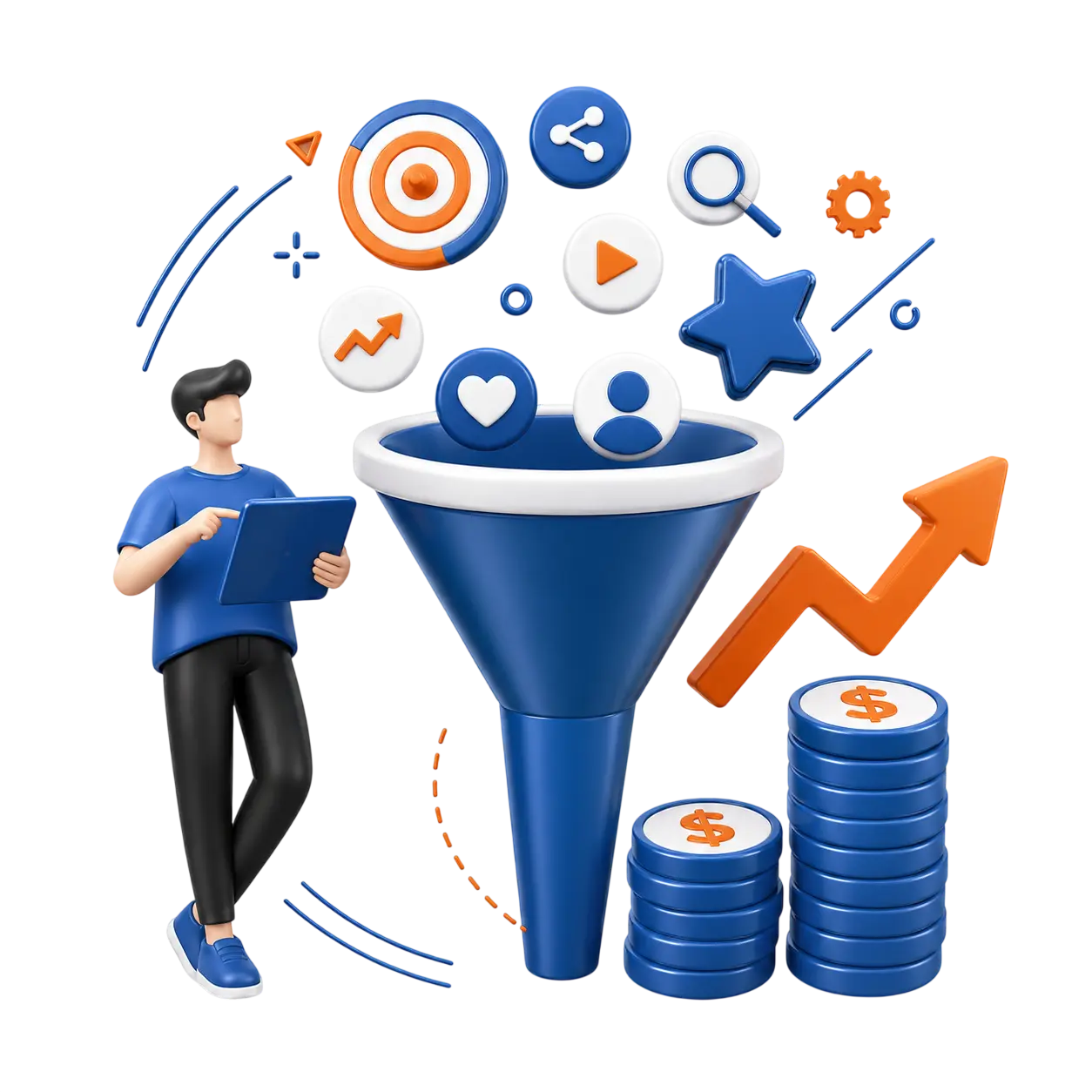
This creates a full content funnel. Instead of pushing every reader to buy immediately, it guides them from awareness to trust to action.
A strong LinkedIn content strategy should include:
Awareness content: Helps buyers understand a problem.
Educational content: Explains solutions and options.
Authority content: Shares expert insights.
Proof content: Shows results and case studies.
Trust content: Explains process and reliability.
Conversion content: Invites the buyer to take action.
This creates a full content funnel. Instead of pushing every reader to buy immediately, it guides them from awareness to trust to action.
Still creating the same content for different target audiences?

Still creating the same content for different target audiences?
Ignoring Market-Specific Messages for USA, UK, & Canada
B2B buyers in the USA, UK, and Canada have different expectations, business cultures, and decision-making priorities. So, a generic global message
does not always work. Below is the table that shows what will work best for the relevant international markets.
Ignoring Market-Specific Messages for USA, UK, & Canada
B2B buyers in the USA, UK, and Canada have different expectations, business cultures, and decision-making priorities. So, a generic global message
does not always work. Below is the table that shows what will work best for the relevant international markets.
Location
- USA
- UK
- Canada
What Buyers Value?
- Speed, Scalability, ROI, Innovation & Growth
- Reliability, Professionalism, Compliance & Long-Term Quality
- Trust, Consistency, Practical Value & Service Reliability
Location
- USA
- UK
- Canada
What Buyers Value?
- Speed, Scalability, ROI, Innovation & Growth
- Reliability, Professionalism, Compliance & Long-Term Quality
- Trust, Consistency, Practical Value & Service Reliability
This does not mean every buyer is the same, but your content should show market awareness.
Examples of market-specific content:
“Why USA B2B companies need conversion-focused websites before scaling paid ads.”
“What UK SMEs should check before choosing a technology partner.”
“How Canadian eCommerce businesses can improve product-page SEO.”
“Common LinkedIn lead generation mistakes made by B2B companies in North America.”
“Why professional communication matters in offshore B2B partnerships.”
Location-relevant content improves trust because buyers feel you understand their business environment.
This does not mean every buyer is the same, but your content should show market awareness.
Examples of market-specific content:
“Why USA B2B companies need conversion-focused websites before scaling paid ads.”
“What UK SMEs should check before choosing a technology partner.”
“How Canadian eCommerce businesses can improve product-page SEO.”
“Common LinkedIn lead generation mistakes made by B2B companies in North America.”
“Why professional communication matters in offshore B2B partnerships.”
Location-relevant content improves trust because buyers feel you understand their business environment.
Not Addressing Buyer Objections
B2B buyers have concerns before they enquire. If your content does not answer those concerns, they may never contact you.
Common buyer objections include:
Will this company understand our market?
Can they deliver on time?
Do they have relevant experience?
Will communication be smooth?
What will the process look like?
How much will it cost?
What results can we expect?
What happens after the project is completed?
Not Addressing Buyer Objections
B2B buyers have concerns before they enquire. If your content does not answer those concerns, they may never contact you.
Common buyer objections include:
Will this company understand our market?
Can they deliver on time?
Do they have relevant experience?
Will communication be smooth?
What will the process look like?
How much will it cost?
What results can we expect?
What happens after the project is completed?
For example:
“How we manage weekly reporting for USA and UK clients.”
“What a B2B website project timeline usually looks like.”
“What to check before hiring an offshore SEO agency.”
“Why cheap development often becomes expensive later.”
“How to measure ROI from LinkedIn marketing.”
When you answer buyer concerns openly, you reduce friction and build trust.

For example:
“How we manage weekly reporting for USA and UK clients.”
“What a B2B website project timeline usually looks like.”
“What to check before hiring an offshore SEO agency.”
“Why cheap development often becomes expensive later.”
“How to measure ROI from LinkedIn marketing.”
When you answer buyer concerns openly, you reduce friction and build trust.
Their Outreach Feels Like Spam
LinkedIn outreach can work, but most companies use it badly.
Bad outreach is generic, fast, and self-focused.
Example:
“Hi, we provide software, website, app, SEO, and digital marketing services. Please let me know if you have any requirement.”
This message fails because it does not show research, relevance, or value.
Better outreach is specific and thoughtful.
Example:
“Hi [Name], I noticed your company is expanding its B2B services in the UK. Many companies at this stage struggle to turn website traffic into qualified enquiries. I share content around B2B lead generation and conversion strategy. Happy to connect.”
This message is not perfect for every case, but it is better because it is contextual.
Their Outreach Feels Like Spam
LinkedIn outreach can work, but most companies use it badly.
Bad outreach is generic, fast, and self-focused.
Example:
“Hi, we provide software, website, app, SEO, and digital marketing services. Please let me know if you have any requirement.”
This message fails because it does not show research, relevance, or value.
Better outreach is specific and thoughtful.
Example:
“Hi [Name], I noticed your company is expanding its B2B services in the UK. Many companies at this stage struggle to turn website traffic into qualified enquiries. I share content around B2B lead generation and conversion strategy. Happy to connect.”
This message is not perfect for every case, but it is better because it is contextual.
Good outreach should:
Mention a relevant reason for connecting.
Focus on the buyer’s possible problem.
Avoid pitching too early.
Sound professional.
Start a conversation.
LinkedIn outreach should feel like networking, not mass selling.

Good outreach should:
Mention a relevant reason for connecting.
Focus on the buyer’s possible problem.
Avoid pitching too early.
Sound professional.
Start a conversation.
LinkedIn outreach should feel like networking, not mass selling.
Running Ads Before Building Trust
LinkedIn ads can be powerful, but ads can not fix weak positioning. Many B2B companies run ads before their foundation is ready.
The ad may get clicks, but when buyers check the company page, founder profile, website, or case studies, they do not find enough trust signals.
Running Ads Before Building Trust
LinkedIn ads can be powerful, but ads can not fix weak positioning. Many B2B companies run ads before their foundation is ready.
The ad may get clicks, but when buyers check the company page, founder profile, website, or case studies, they do not find enough trust signals.
Before running ads, companies should improve:
Company page positioning.
Founder profile.
Service page content.
Case studies.
Landing page clarity.
Offer quality.
Lead magnet.
CRM process.
Follow-up system.
Sales response time.
LinkedIn ads amplify what already exists. If your message is strong, ads can scale it. If your message is weak, ads will only make the weakness more expensive.
Before running ads, companies should improve:
Company page positioning.
Founder profile.
Service page content.
Case studies.
Landing page clarity.
Offer quality.
Lead magnet.
CRM process.
Follow-up system.
Sales response time.
LinkedIn ads amplify what already exists. If your message is strong, ads can scale it. If your message is weak, ads will only make the weakness more expensive.
Not Using AEO-Friendly Content
AEO stands for Answer Engine Optimization. It lets you create the content that directly answers the questions that buyers are searching for.
In the AI era, modern buyers not only search keywords but also ask full questions.
Not Using AEO-Friendly Content
AEO stands for Answer Engine Optimization. It lets you create the content that directly answers the questions that buyers are searching for.
In the AI era, modern buyers not only search keywords but also ask full questions.
Examples:
Why does LinkedIn marketing fail for B2B companies?
How can B2B companies generate leads from LinkedIn?
What should a B2B LinkedIn strategy include?
Is LinkedIn good for SaaS lead generation?
How often should B2B companies post on LinkedIn?
What content works best for LinkedIn in the USA, UK, and Canada?
Your content should answer these basic questions clearly.
It will help you to rank in the AI snippet.
AEO-friendly LinkedIn and blog content should include:
Direct answers
Question-based headings
Simple explanations
Step-by-step sections
FAQs
Comparison points
Practical examples
When your content answers real questions, it becomes more useful for readers and search engines.
Examples:
Why does LinkedIn marketing fail for B2B companies?
How can B2B companies generate leads from LinkedIn?
What should a B2B LinkedIn strategy include?
Is LinkedIn good for SaaS lead generation?
How often should B2B companies post on LinkedIn?
What content works best for LinkedIn in the USA, UK, and Canada?
Your content should answer these
basic questions clearly.
It will help you to rank in the AI snippet.
AEO-friendly LinkedIn and blog content should include:
Direct answers
Question-based headings
Simple explanations
Step-by-step sections
FAQs
Comparison points
Practical examples
When your content answers real questions, it becomes more useful for readers and search engines.
Not Connecting LinkedIn With Website SEO
LinkedIn and SEO should work together.
Many B2B social media marketing strategies include LinkedIn posting but their website does not support the buyer journey. A buyer may click from LinkedIn to the website and find weak service pages, poor content, unclear CTAs, slow loading pages, or no case studies. As a result, it breaks trust. However, a strong B2B growth system connects LinkedIn with the website.
LinkedIn builds awareness and trust. The website explains services and proof. SEO brings search demand.
Case studies support decision-making. Landing pages convert traffic into leads.
For example, if you post about “LinkedIn lead generation for B2B companies,” your website should have a relevant service page, blog, case study,
or landing page that continues the same conversation. Therefore, improving both user experience and conversion potential.
Not Connecting LinkedIn With Website SEO
LinkedIn and SEO should work together.
Many B2B social media marketing strategies include LinkedIn posting but their website does not support the buyer journey. A buyer may click from LinkedIn to the website and find weak service pages, poor content, unclear CTAs, slow loading pages, or no case studies. As a result, it breaks trust. However, a strong B2B growth system connects LinkedIn with the website.
LinkedIn builds awareness and trust. The website explains services and proof. SEO brings search demand.
Case studies support decision-making. Landing pages convert traffic into leads.
For example, if you post about “LinkedIn lead generation for B2B companies,” your website should have a relevant service page, blog, case study,
or landing page that continues the same conversation. Therefore, improving both user experience and conversion potential.
Not Using GEO-Friendly Content
GEO-friendly content is important when your target locations are specific and precise. If you want to attract buyers in the USA, the UK, and Canada, your content should naturally reflect these markets. However, this does not mean keyword stuffing. It means creating relevant content for each geography.
Examples:
“LinkedIn marketing for B2B companies in the USA.”
“B2B lead generation strategy for UK service companies.”
“SEO and LinkedIn growth for Canadian eCommerce brands.”
“How North American B2B buyers evaluate agencies.”
“Why do UK businesses need proof before hiring offshore vendors.”
GEO-friendly content helps search engines and buyers understand who you serve. It also makes your content feel more relevant. A Canadian buyer is more likely to trust content that understands Canadian eCommerce or local business needs. A UK buyer is more likely to trust content that reflects UK expectations.
A USA buyer is more likely to respond to content that speaks about growth, scale, and ROI.
Not Using GEO-Friendly Content
GEO-friendly content is important when your target locations are specific and precise. If you want to attract buyers in the USA, the UK, and Canada, your content should naturally reflect these markets. However, this does not mean keyword stuffing. It means creating relevant content for each geography.
Examples:
“LinkedIn marketing for B2B companies in the USA.”
“B2B lead generation strategy for UK service companies.”
“SEO and LinkedIn growth for Canadian eCommerce brands.”
“How North American B2B buyers evaluate agencies.”
“Why do UK businesses need proof before hiring offshore vendors.”
GEO-friendly content helps search engines and buyers understand who you serve. It also makes your content feel more relevant. A Canadian buyer is more likely to trust content that understands Canadian eCommerce or local business needs. A UK buyer is more likely to trust content that reflects UK expectations.
A USA buyer is more likely to respond to content that speaks about growth, scale, and ROI.
Not Staying Consistent Long Enough
B2B LinkedIn marketing takes time. Buyers may not enquire immediately after seeing one post. They may see your content several times before they remember your company. A buyer may first notice your founder’s post followed by a case study. Later, they may visit your company page. After that, they may check your website. Then, when they need help, they may contact you.
This process can take weeks or months. But many companies quit too early because they expect quick results. They post for one month and say LinkedIn does not work. What they forget is that LinkedIn works when content is consistent, useful, and connected to a business goal.
Consistency builds recognition. Recognition builds trust. Trust creates opportunities.
Not Staying Consistent Long Enough
B2B LinkedIn marketing takes time. Buyers may not enquire immediately after seeing one post. They may see your content several times before they remember your company. A buyer may first notice your founder’s post followed by a case study. Later, they may visit your company page. After that, they may check your website. Then, when they need help, they may contact you.
This process can take weeks or months. But many companies quit too early because they expect quick results. They post for one month and say LinkedIn does not work. What they forget is that LinkedIn works when content is consistent, useful, and connected to a business goal.
Consistency builds recognition. Recognition builds trust. Trust creates opportunities.
Conclusion
Most B2B companies do not fail at LinkedIn marketing because LinkedIn is weak. They fail because their strategy is weak. They post without understanding the buyer using generic messaging. LinkedIn marketing works when it is treated as a complete business growth system.
For B2B companies targeting buyers in the USA, UK, and Canada, LinkedIn should build authority, educate prospects, answer objections, support sales, and drive qualified enquiries. The companies that win are not the ones that post the most. They are the ones that understand their buyers better, communicate with clarity, share proof consistently, and stay visible until the buyer is ready.
Stop using LinkedIn as a company notice board. Start using it as a trust-building, authority-building, and lead-generation channel.
Conclusion
Most B2B companies do not fail at LinkedIn marketing because LinkedIn is weak. They fail because their strategy is weak. They post without understanding the buyer using generic messaging. LinkedIn marketing works when it is treated as a complete business growth system.
For B2B companies targeting buyers in the USA, UK, and Canada, LinkedIn should build authority, educate prospects, answer objections, support sales, and drive qualified enquiries. The companies that win are not the ones that post the most. They are the ones that understand their buyers better, communicate with clarity, share proof consistently, and stay visible until the buyer is ready.
Stop using LinkedIn as a company notice board. Start using it as a trust-building, authority-building, and lead-generation channel.
Transform Your LinkedIn Into a Powerful Personal Brand
Transform Your LinkedIn Into a Powerful Personal Brand
Frequently asked questions
Most B2B companies fail at LinkedIn marketing because they post generic content, sell too early, ignore buyer trust, lack clear positioning, and do not connect content with lead generation.
Yes. LinkedIn is one of the best platforms for B2B lead generation in the USA, UK, and Canada because it allows companies to reach decision-makers, build authority, share proof, and start business conversations.
The best LinkedIn content for B2B companies includes case studies, founder insights, educational posts, market-specific advice, comparison content, buyer objection posts, and proof-based content.
B2B companies should post consistently, ideally three to five times per week. However, quality is more important than quantity. One useful, expert-led post is better than multiple generic promotional posts.
LinkedIn ads fail when companies run campaigns without clear positioning, strong landing pages, case studies, audience targeting, lead magnets, and a proper follow-up system..
B2B companies can target the USA, the UK, and Canada audiences by creating location-specific content, connecting with relevant decision-makers, optimizing profiles, sharing international case studies, and using personalized outreach.
Yes. Founder-led content is very important for B2B marketing because buyers trust people more than company pages. A founder’s profile can build authority, credibility, and stronger relationshipsch.
Frequently asked questions
Most B2B companies fail at LinkedIn marketing because they post generic content, sell too early, ignore buyer trust, lack clear positioning, and do not connect content with lead generation.
Yes. LinkedIn is one of the best platforms for B2B lead generation in the USA, UK, and Canada because it allows companies to reach decision-makers, build authority, share proof, and start business conversations.
The best LinkedIn content for B2B companies includes case studies, founder insights, educational posts, market-specific advice, comparison content, buyer objection posts, and proof-based content.
B2B companies should post consistently, ideally three to five times per week. However, quality is more important than quantity. One useful, expert-led post is better than multiple generic promotional posts.
LinkedIn ads fail when companies run campaigns without clear positioning, strong landing pages, case studies, audience targeting, lead magnets, and a proper follow-up system..
B2B companies can target the USA, the UK, and Canada audiences by creating location-specific content, connecting with relevant decision-makers, optimizing profiles, sharing international case studies, and using personalized outreach.
Yes. Founder-led content is very important for B2B marketing because buyers trust people more than company pages. A founder’s profile can build authority, credibility, and stronger relationshipsch.