AI agents are moving from experimentation to practical business use. For startups, SMEs, and growing enterprises, the smartest first step is no to automate everything. It is to automate the workflows where speed, consistency, and better decisions create measurable value. That is where strong ai consulting services matter: they help teams choose the right use case, data sources, and rollout plan before spending heavily.
In simple terms, AI agents are systems that can understand goals, use tools, follow rules, and complete tasks with limited supervision. IBM describes AI agents as systems that can autonomously perform tasks using available tools. For businesses in the US, Canada, UAE, and India, the opportunity is real, but so is the need for structure and oversight.

Why AI agents are a practical fit for business workflows
Unlike a basic chatbot, agentic AI can take action across connected systems. It can search documents, classify requests, trigger approvals, summarize tickets, draft replies, and hand work to a human when confidence is low. This makes it useful for workflow automation in teams that handle large volumes of repetitive work.
In practice, the best early wins come from workflows with three traits: high volume, repeatable rules, and clear success metrics. That is why many ai development services engagements start with support, internal knowledge access, sales coordination, and finance administration.
7 business workflows worth automating first
1. Customer support triage
Support agents are one of the best starting points. An AI agent can read incoming tickets, detect intent, prioritize urgency, suggest answers from approved sources, and route the issue to the right team. A common SME example is using an agent to separate billing, onboarding, and technical questions so support staff focus on the exceptions.
2. Internal knowledge search
Internal knowledge agents help employees find policies, SOPs, proposals, and product answers across shared drives and documentation systems. Instead of interrupting managers or searching across folders, teams get faster access to approved information. This is often a low-risk, high-adoption use case because it improves productivity across departments.
3. Lead qualification and sales ops automation
Sales teams lose time updating CRM records, scoring leads, and preparing follow-ups. AI agents can review inbound forms, enrich lead context, assign scores based on rules, generate meeting briefs, and suggest next actions. This kind of sales ops automation helps smaller teams move faster without adding headcount.
4. Proposal and document drafting
Many businesses create similar proposals, quotes, and onboarding documents repeatedly. An AI agent can assemble approved content blocks, draft first versions, and flag missing inputs. Human review still matters, but teams save hours on repetitive drafting. This is where an experienced ai solutions company can connect templates, approvals, and audit trails into one reliable process.
5. Invoice checks and finance follow-ups
Finance teams often spend time answering status questions, matching records, and chasing incomplete payments. AI agents can compare invoices against purchase data, answer routine finance queries, draft reminders, and escalate mismatches for review. The key is to keep approval authority with people while the agent handles the repetitive preparation work.
6. Employee onboarding and HR requests
HR teams deal with repeated questions about leave, documents, benefits, and joining steps. An onboarding agent can guide new hires through checklists, collect required details, surface policy answers, and send reminders to managers or IT. This improves the employee experience while reducing manual coordination.
7. Reporting and operational summaries
Many leaders do not need more dashboards; they need faster interpretation. AI agents can monitor selected data sources, summarize trends, flag anomalies, and generate action-focused updates for operations, sales, or project delivery. This is especially valuable for businesses already using predictive analytics and wanting a more actionable operating layer.
How to choose the right workflow first
Start small. A practical evaluation model includes four questions:
Is the workflow repetitive? Repetition usually means faster returns
Is the data accessible? Agents need secure access to the right systems and knowledge sources.
Can humans review exceptions? Early deployments work best when edge cases are escalated.
Can you measure impact? Track response time, hours saved, conversion rates, or resolution speed.
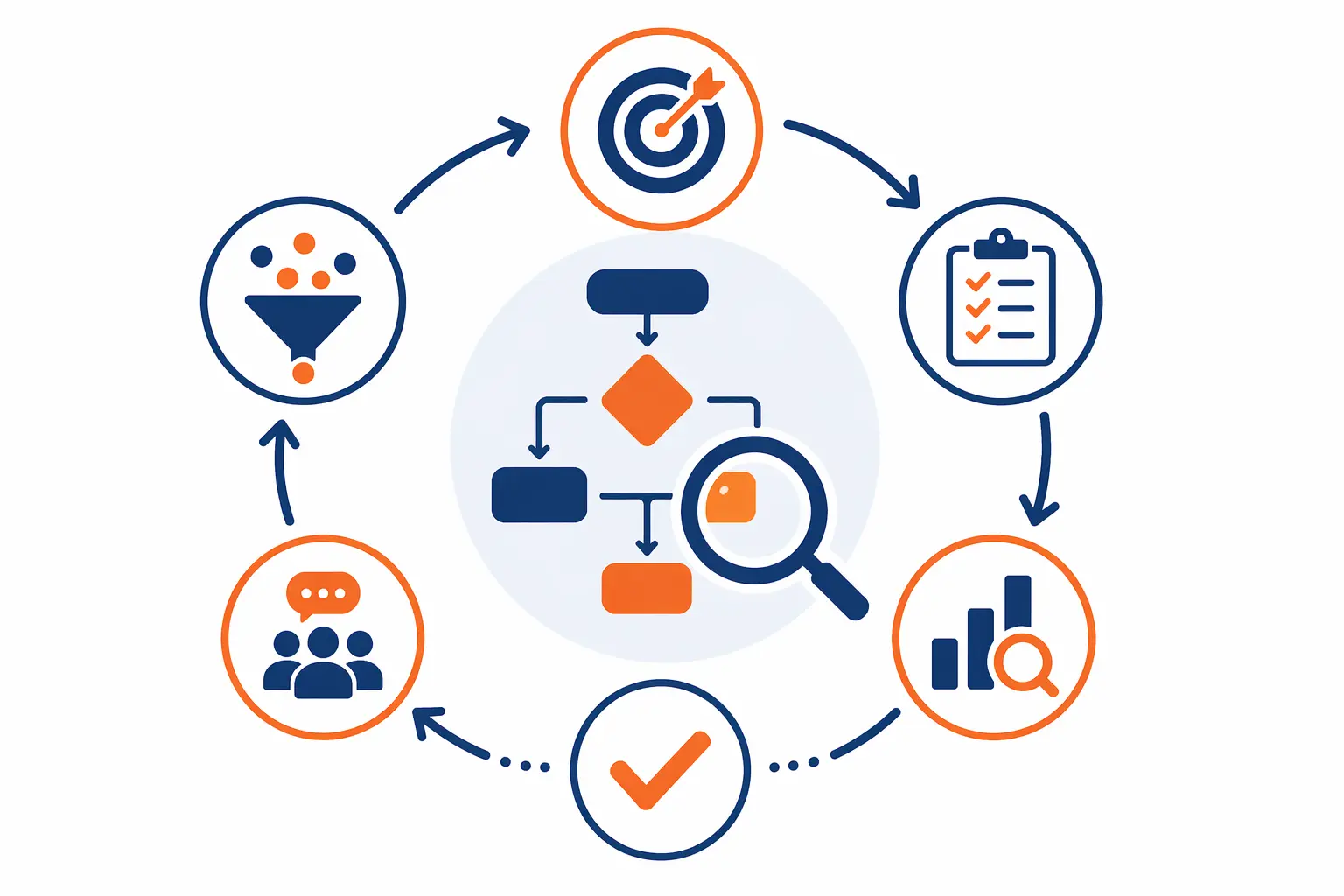
This is why experienced ai consulting partners often recommend an enterprise AI roadmap built around discovery, pilot testing, guarded rollout, and ongoing improvement.
Trust, security, and governance matter

Businesses should not focus only on speed. They should also assess privacy, access control, logging, fallback behavior, and model accuracy. The
NIST AI Risk Management Framework offers a practical structure for managing AI risk, while ISO/IEC 42001 outlines how to establish and improve an AI management system. These are useful reference points for responsible deployment.
A trustworthy rollout also means setting boundaries. Sensitive approvals, regulated decisions, and customer commitments should include human oversight. In most cases, businesses should automate preparation and coordination first, then expand autonomy only when governance is mature.

Conclusion
AI agents create the most value when they are applied to the right workflow first. For most SMEs, the strongest early targets are support triage, internal knowledge access, sales coordination, document drafting, finance administration, onboarding, and operational reporting. These use cases offer a practical path to faster service, lower manual workload, and better visibility.
If your business is exploring AI / ML, begin with one high-impact workflow and a clear success metric. The right strategy combines business goals, secure integration, human oversight, and measurable outcomes. That is how ai consulting services turn AI from a trend into operational value.
Frequently Asked Questions
AI agents are software systems that can understand tasks, use connected tools, follow rules, and complete parts of a workflow with limited human supervision.
AI consulting services help SMEs choose the right use case, assess data readiness, define governance, and launch pilots that deliver measurable business value.
Customer support triage, internal knowledge search, and sales ops automation are often the best starting points because they are repetitive, measurable, and easier to govern
Yes, when they are deployed with role-based access, approved data sources, logging, and human review for exceptions and final approvals.
Common metrics include response time, hours saved, conversion rate, cost per task, resolution speed, employee productivity, and error reduction.

Ready to identify your first AI
use case?
Connect with KoderXpert to build a practical automation plan and launch a secure AI workflow that delivers measurable business value.
Talk to KoderXpert